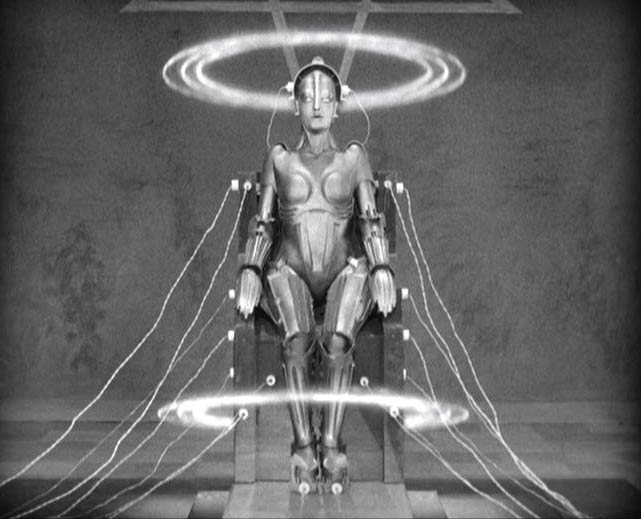
Fritz Lang's
Metropolis might not seem too impressive to us today but in 1927, it pushed the boundaries of special effects. I hope as you watched that you were able to look past the dated-ness of the film and see it through the eyes of the people who saw it first and consider just how much work and ingenuity went into creating the images on the screen.
I hope the film also helped you to gain a firmer grasp of what German Expressionist cinema is like and helped you to understand what the German people were feeling and struggling with during the woe-some years of the Weimar Republic.
As you write about
Metropolis below, please answer two of the following questions:
- What moments in the film stuck out to you as particularly great examples of German Expressionism? Why?
- Which special effects impressed you the most? Why?
- In what ways do you feel this film is a reflection of what was happening in Germany during the Weimar Republic? Explain.
- Which soundtrack (Radiohead or Billy Joel) did you appreciate more and why?
And then, if you'd like some extra credit, you can also write about Leni Riefenstahl's masterful Nazi propaganda piece Triumph of the Will (1935). If you choose to write about this one, please answer at least one of the following questions:
- How did you personally respond to seeing Triumph of the Will? What did you find uncomfortable? What did you find impressive?
- How did seeing Metropolis prepare you to see Triumph of the Will? How did seeing Triumph of the Will change how you think of Metropolis?
- Is there value in modern audiences watching Triumph of the Will? Explain.