Tuesday, October 28, 2014

FILM HISTORY: Second Movie at Home

Now is the time to pick another film from the AFI list that you haven't seen and watch it at home and then post about it here in the comments below this very post.

You need to have watched the film and posted about it by November 3.

If you have lost your AFI list, you can access it by clicking here.

Now, when you post about the film, you need to do the following:


  1. State the name of the film you watched.
  2. Write three full paragraphs about it.
  3. Answer four of the following questions:

    • Do you feel the film you watched is more like an Edison film or more like a Lumiere film? Why?
    • Did anything we've learned in film history class so far help you appreciate the film more? If so, tell us which thing that we learned helped you and how it helped?
    • Why do you feel the film you watched is on the AFI 100 list? Remember the four criteria the AFI used to make their list.
    • Were any of the special effects invented by Melies used in the film? If so, state which Melies special effect was used and describe how it was used in one moment of the film.
    • Were there any moments of the film that had particularly impressive cinematography, editing, acting, writing, lighting, sound, etc. If so, describe the moment to us and tell us what was so special about the use of the filmic element?
    • Was this film made pre-Hays code, during the Hays code, or after the Hays code was over? If it was made during the Hays code, what moments did you notice that were obviously censored or "toned down" because of the Hays code? If it was made before or after the Hays code, what moments did you notice that would not have been allowed during the Hays code?
    • Would you recommend this film to other members of the class? Why or why not?

Monday, October 27, 2014

TALKIES!!! (The Early 1930s)

Talkies, eh!!!!  1927's The Jazz Singer totally punched silent films in the face.  Every studio knew they had to shift to "talking pictures"!  The talkies were all the rage.  Shifting into this new kind of filmmaking totally changed the way movies were made for a while - instead of slapstick visual gags, we got wordplay.  And, for a while, instead of sweeping beautiful camera movements, we got static, non-moving images, the loud camera put behind class and microphones hidden everywhere.  Sound was tricky to record well, silent film stars lost their jobs, the movies dipped in quality, and things were looking kinda grim for cinema... but cinema is a resilient beast, and it was only a few years later when enough tweaks were made to cameras to make them quieter and inventions put in place to make the microphones better and cinema was having its fair share of masterpieces yet again!  Huzzah!!!

We've had a chance to watch some really interesting early sound movies, each one different, unique, and important in their own right.  So, let's "talk" about them, shall we?  (See what I did there, since this blog is about "talkies"?  Eh?...well I guess you're actually writing about them...)... Um, so let's write about talkies!!!

For each of the following films, write thoughtful answers to each question.  Give us at least three good, solid paragraphs for EACH movie.  THANKS!

The Artist (2011)


We watched this movie as a goodbye to the silent film era.  Interestingly enough, it was made a century after that time period.  But, what a perfect way to say goodbye!  A silent movie about the coming of sound cinema, and how it totally devastated the life of a silent film star at the top of his game, and brought fame and fortune to another no-name actress.

This movie is such a painfully accurate representation of that time in history, and it is told so uniquely.

Here are your questions:


  • Did the way this story was told (done as a silent film) work for you, or do you wish they'd just made it a sound film about that time period?  Why?
  • What did you learn about the shifting from the "silent film" era to "talkies" that you hadn't thought of before, thanks to this film?
  • What was the overall message or theme to you?


King Kong (1933)

This movie was so important historically, I can't even stand it!  This movie was the first creature adventure film of this scale.  Yes, we had monsters and creatures and dinosaurs before in earlier movies, but never such a huge creature!  

And, sound wise, this movie is the father of Sound Engineering, the first movie to have such a long, original score instead of library music or sparse music.  Yeah King Kong!  

OK friends, time to answer the following questions!

  • How'd you like this movie?
  • Why do you think that, even when people were dirt poor and could barely afford to eat, they still went to see this movie about a giant Ape?  
  • Did the music and sound design enhance your movie going experience?  Why or why not?

Freaks (1932)   

What a cool, interesting, and less flashy movie than King Kong.  This one is quieter, but not less interesting.  Just different.  Horror director Tod Browing brought to this world a movie that after the Hayes' Code just a year or so later, couldn't have been made.


  • Did you like this movie?  Why or why not?
  • What was the message of this movie, in your opinion?
  • Did you like the use of real circus people instead of actors in this movie?  Why or why not?

Gold Diggers of 1933 (1933)

Musicals from the '30s are definitely something else!  We're all used to the kind of musicals we get today.  But, movie musicals have had a very long tradition of catchy tunes and interesting visuals.  A tradition that started long ago.  In a galaxy far, far away... and by that, I mean here, in the USA.
Like I mentioned in class, this film is an important piece of film history for several different reasons.  It is a representation of the early musicals, a place where people don't just burst into song, but there is plenty of singing to do as they get ready to put on a play.  It is a movie made during The Depression about The Depression.  It is the last of the Pre-Hayes code movies.  And, it has choreography by legendary Busby Berkeley, someone who anyone who cares about dance and musicals should know about.


  • So, what did you think?  Did you like this movie?  Why or why not?
  • What Pre-Hayes code content did you notice?
  • Why do you think musicals like this were so gosh darn popular during the Great Depression?


Tuesday, October 21, 2014

Japan! Akira Kurosawa and Sanjuro; Miyazaki; Six String Samurai; and Samurai Fiction

Sanjuro! (1962)


Well, we begin our trip to Japan with this wonderful little Samurai movie made by the man who made Samurai movies famous in these here parts.  Seriously, Kurosawa and Samurai movies go hand in hand, even the Barenaked Ladies sing about it: just click this link, I'll prove it to you.

Kurosawa means more to me than I can explain.  His films have influenced me so much, and I've seen more movies by him than almost by any other director.  I love the composition of his shots, I love his interesting characters, I love his passion for the craft.  Sanjuro is one of my favorite Samurai films.  It is authentic and classic.  It is full of Japanese culture, tradition, costumes, and it has sweet Samurai fighting.  I think what I love most about it is Toshiro Mifune's character, Sanjuro himself.  Ronin, on his own, scruffy, a man with an intensely violent and selfish past, a washed-up Samurai who still, even though older wayward, learns something about who he is, what he's become, and he grows, changes, and even does somethings selflessly.  I think that's cool.  It is a theme I hold near and dear to me.


Plus, this movie has sweet sword fights!  And I love sword fights!

Anywho, as you know I love the director, I love the main actor, I love the era the movie is set in, I love the movie!

What do you think?


  • Was this your first Samurai movie?  If so, what kind of experience was it for you?  If not, what was your first, and how did you like this one in comparison? 
  • What is the message of the film?
  • What did you learn about Japanese history or culture from watching this movie?


The Castle of Cagliostro (1979)

Hayao Miyazaki's first film!  Beloved by so many for his Studio Ghibli masterpieces, it is always fun and important to see an iconic director's first work.  And, starring Lupin III, a character famous in Japanese Manga, it is cool to get a bit of the Japanese pop-culture that way, too!

  • Did you like the film?  Why or why not?
  • Have you seen other Miyazaki and/or Studio Ghibli films?  How did this one rank in your opinion?
  • Often for American audiences, films from Ghibli are dubbed over.  I made it a point to show you the film with its original Japanese dialogue.  Have you ever seen a Japanese anime in its original language before?  If not, how was your experience seeing this one in Japanese?  How was it different to see one in Japanese vs. in English?


Six-String Samurai (1998)

An independent American-made Samurai movie with an interesting rock 'n roll twist.  This movie is definitely something else!

  • Did you like it?  Why or why not?
  • How did knowing a bit about Samurai history and seeing a classic Samurai film before seeing this one affect your viewing experience?


Samurai Fiction (1998)

Yeah!  A classic Samurai movie made in modern times, with a twist!

  • Did you like it?  Why or why not?
  • Did having watched a truly classic samurai movie before enhance your viewing experience of this movie?  How so?


Gunless: A Canadian Western that Knows it's a Canadian Western (EXTRA CREDIT)

Gunless (2010)

Is almost an old timey western with all the elements of the genre - a lone gunman who has a dark and less than perfect past wanders into a small town, and even though he's running from his past, he needs to use his skills as a gunman one more time to defend the innocent people of the town from bad dudes.

We've seen this plot a bagillion times... but, that's not all that's going on here, because this movie also happens to be Canadian, set in Canada, made by Canadians, funded by Canada; a movie that celebrates Canada while making fun of and laughing at itself.

It is a movie that understands the western genre it is, one made by filmmakers you can tell love American Westerns; but it is still unique in its Canadian-ness.  One that is as proud to be Canadian as it is proud to be a Western.  I love this blend, this slant on a classic genre.


I completely enjoyed this film.  The question of the day is, did you?


Answer these questions about Gunless, and remember to be thoughtful in your answers:
  • What, in your opinion, was the main message of the movie?
  • Did you like the movie?  Why or why not?
  • Remember the four points the National Film Board likes covered.  Which one, or ones, did this movie fulfill?
    • Preserve Canadian Culture.
    • Promote a Social Cause.
    • Educate.
    • Promote Tourism.


Have a good day, eh!


Tuesday, October 14, 2014

FOR INTERNATIONAL CINEMA ONLY! (All you film historians, keep away!)

CANADIAN WEEK!!!
Hey, you hosers, take to look deeper into the movies we watched from the Great White North, you knobs!  Answer all the questions you see below.  Give me some thoughtful answers, and may the force be with you.


STRANGE BREW (1983)

Well, you know how I feel about this movie.  I gave you my entire life story about why I love it so much.  And, in my mind, as silly as it is, it is secretly brilliant.  But, that's my opinion.  Maybe you hated every second of this, and, it being a re-telling of Shakespeare's Hamlet or not, maybe you thought it was dumb.  So the first question:


  • Did you like this movie?  Why or why not (again, I want thoughtful answers here, you rink rats)?
  • Did the film follow any of the things the National Film Board of Canada asked films to fulfill?
  • What lessons did you learn from this film about life and the world?


LARS AND THE REAL GIRL (2007)


Yes!  This movie is so good!  And, I tell you, a quirky, cute, cathartic movie as unique as this would have a hard time getting made in the U.S. of A., but that's to the National Film Board of Canada, it had the help it needed to come to pass up north.

It is stories like this that we can have the wonderful opportunity of experiencing thanks to the whole wide world of cinema being out there!

Ok, answer the following questions about Lars and the Real Girl:


  • Did you like this movie?  Why or why not?
  • What was the message of this film, in your opinion?
  • Which purpose or purposes of the Canadian Film Board do you think this fulfills?
  • How is this film different from typical Hollywood movies?  How is it different?


THE GATE (1987)


"You've got demons."

I love this film.  With all my HEART.  It is a true example of many creative forces working together, most people doing multiple jobs for not a lot of money, to tell a story they all care about.  This movie is a true gem.  It's a horror movie for children, thus the happy ending and children protagonists, but one that has the "guts" (pun intended) to put some seriously scary stuff in.  One that respects the fact that children can handle fear, that they are braver than adults often give them credit for.  Plus, it makes for a horror film that you can still love every bit of as an adult (I'm going to be watching this one as a growed-up person with my own kiddos one day, that's for darn sure).  I don't think scary movies made for kids have the same bravado anymore. (Do they even make scary movies for children anymore?)


  • What did you think of The Gate?  
  • And, how does this Canadian horror film differ from Hollywood horror films?  How is it similar?


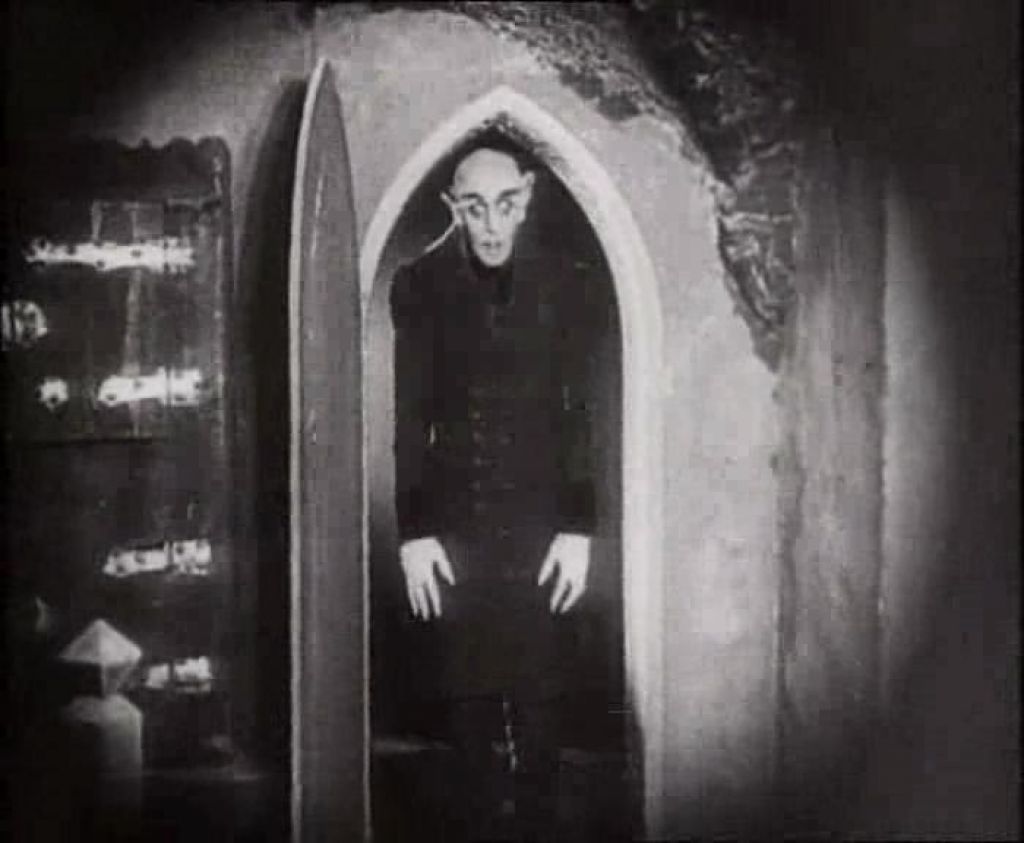
Nosferatu (1922)


I hope Nosferatu was a special German Expressionist visceral treat for you! I am curious to know what you thought about the film, its German Expressionist style, and the music used. The cut of the film we watched in class features a score by Brandon Arnold, a film instructor who used to teach at our school. I think it is interesting how he used very modern music (relative to 1922) to add mood to a film that was made so long ago.

Some people feel like these kind of scores are an insult to the original silent film because they do not feature music that existed then. I personally disagree because the original films did not have scores at this time. I don't have a problem with people today mixing their art with the art of the original film to create a new experience for the audience. I think that's pretty cool. But you might feel otherwise and will have the chance to articulate such feelings below.

Now that you've seen Nosferatu, you might start noticing homages to this film in modern media. For example, this.

When you comment below on Nosferatu, be sure to write a full three paragraphs and to follow these instructions:

1) Answer both of the of the following questions:
  • What aspects of German Expressionism did you see in this movie? Please provide three concrete examples from the film to back up your point.
  • Did you or did you not enjoy this film? Why?
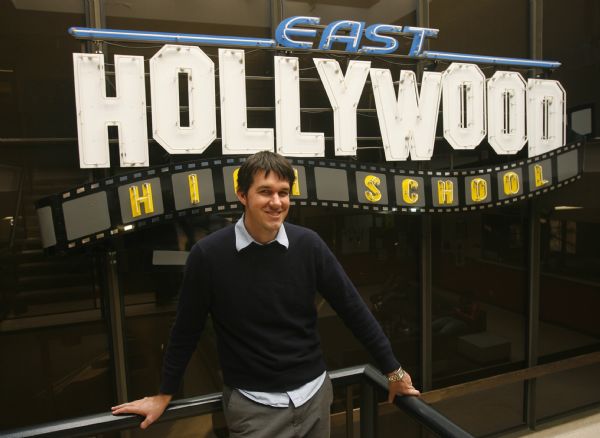
Brandon Arnold—former EHHS teacher and the man who
arranged the score of the cut you watched.
Look at those eyes and creepy smile. Of course he'd score
a German Expressionist vampire movie.
2) Answer two of the following questions:
  • Do you think this movie was scary or creepy? Why or why not? Do you think it would have been scary or creepy for its original audience? Why or why not?
  • Did you like Brandon Arnold's score for the film? Why or why not?
  • What did you make of the acting style of this film? Did you like it or not like it? Why?
  • If you were going to show this film to one of your friends, what would you tell them ahead of time to prepare them for it?
  • ... or ... respond to a comment someone made above. When you respond, either agree or disagree in a civil and respectful manner. Be sure to back up your opinion with three bits of solid evidence/examples.

First Movie at Home


This assignment is due on Monday, October 20. This assignment is worth twice the number of points as a normal blog comment so be sure to do it and do it on time!

This is what you have to do: pick a movie from the AFI 100 list and then comment about it here. Have fun with this! There are probably titles you saw on the AFI list the first day that caused you to think, "I wonder what that is," or, "I've been meaning check that out." Or maybe there's a film that was mentioned in class or elsewhere that sounded interesting to you. This is your chance to finally see that film and get class points for doing so!

When you comment, be sure to follow these instructions:

  • Your comment needs to be a full 3 PARAGRAPHS long.
  • Your comment needs to include the name of the film you watched.
  • Your comment should answer four of the following questions:

    • Did anything we've learned in film history class so far help you appreciate the film more? If so, tell us which thing that we learned helped you and how it helped?
    • Do you feel the film you watched is more like an Edison film or more like a Lumiere film? Why?
    • Why do you feel the film you watched is on the AFI 100 list? Remember the four criteria the AFI used to make their list.
    • Were any of the special effects invented by Melies used in the film? If so, state which Melies special effect was used and describe how it was used in one moment of the film.
    • Were there any moments of the film that had particularly impressive cinematography, editing, acting, writing, lighting, sound, etc. If so, describe the moment to us and tell us what was so special about the use of the filmic element?
    • Would you recommend this film to other members of the class? Why or why not?